



Overview
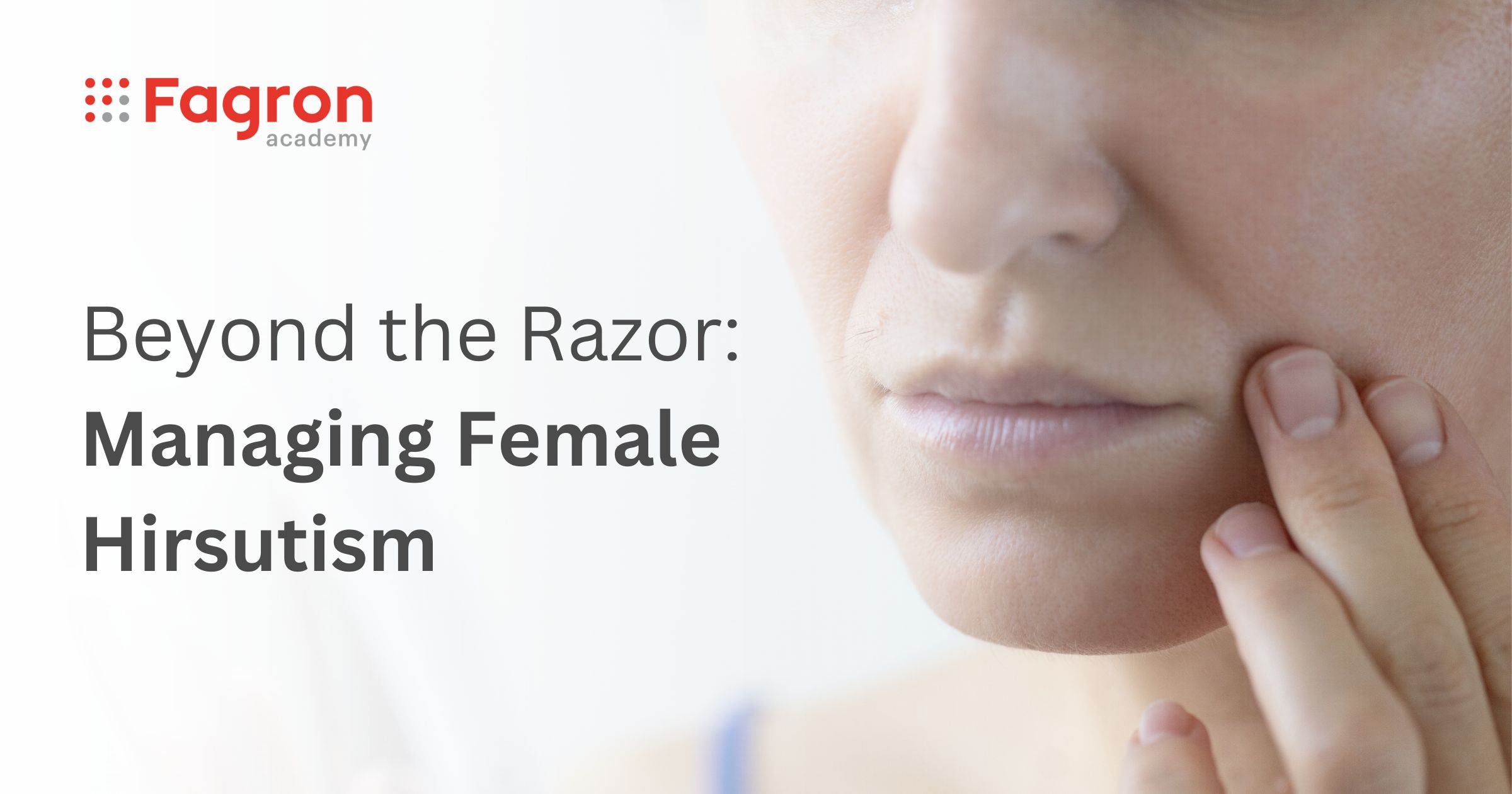
Hirsutism is defined as the growth of excess male-patterned hair in a woman after puberty. Affected areas often include:
- Face
- Pubic hair
- Buttocks
- Thighs
- Chest
Hirsutism is estimated to impact nearly 10% of women in the US and can have a variety of different causes. Primary hirsutism typically has a peripubertal and slow onset and is typically related to genetic factors. Secondary hirsutism develops in older patients and is typically related to hormonal changes, new medications, or other medical conditions such as polycystic ovary syndrome (PCOS). Idiopathic hirsutism is diagnosed when the origin or cause isn’t clear and, unfortunately, estimates put idiopathic hirsutism as accounting for anywhere between 15-50% of women suffering from this condition.
Though the underlying cause may vary, symptoms are the result of overproduction of androgens typically of ovarian or adrenal origin, though, rarely the source may be tumoral or increased cutaneous sensitivity to androgens.1
Underlying Conditions
Though hirsutism may be due to overproduction or oversensitivity to androgens, the former comprises the majority of cases and of these cases PCOS is the most common cause, representing 75% of all cases. In addition to hirsutism, PCOS also often presents with other cutaneous disorders such as acne that may need to be treated concomitantly. Medications may also induce hirsutism, including androgens, glucocorticosteroids, progestins, estrogen antagonists, phenytoin, and cyclosporine among others. Various endocrine disorders (such as hyperprolactinemia or Cushing’s syndrome) or tumors may also rarely cause hirsutism.1
Treatments and Tolerability
Treatment options for management of hirsutism are limited. Eflornithine topical cream, the only FDA approved topical option for hirsutism, was unfortunately discontinued by the manufacturer in 2023, not for reasons of safety or efficacy. Commercially available oral spironolactone, finasteride, flutamide, metformin, or combined oral contraceptives may be considered and have been demonstrated to be beneficial when used for hirsutism. However, the use of systemic treatments increases the risk of systemic adverse effects.
For example, oral finasteride in women has been associated with decreased libido, dry skin, irregular menstruation, headache, and dizziness among other adverse effects.2 Oral spironolactone has been associated with diuretic effects, irregular menstruation, and breast tenderness.3 Flutamide appears to be strongly associated with adverse effects, with one study comparing flutamide to combined oral contraceptives for hirsutism noting that more than 24% of patients withdrew from the study due to adverse effects of flutamide.4
By comparison, eflornithine has very limited systemic absorption, so adverse effects are mainly limited to local topical reactions like local stinging, tingling, or erythema.5,6 Eflornithine is unique from finasteride, flutamide, and spironolactone in its mechanism of action. Rather than targeting androgens, eflornithine inhibits ornithine decarboxylase, an enzyme key for the growth phase in hair follicles.6 This lack of impact on hormone levels may prevent worsening of acne, which can be seen with some treatments that decrease the amount of DHT at the expense of potentially raising testosterone levels.
Treatments and Efficacy
Head-to-head data comparing treatments is very limited. Though eflornithine was the only FDA approved topical option, limited studies evaluated finasteride topically as well.
One study in patients with idiopathic hirsutism had patients apply finasteride 0.25% topical gel once daily to effected areas over a period of 6 months found statistically significant reduction in hair diameter. This reduction corresponded to a little more than a 15% reduction in mean hair thickness, but patients reported this increased the ease of plucking and shaving for them significantly.7
Another study evaluated a higher concentration of finasteride 1% over 6 months. This study unfortunately did not use an objective method (like hair diameter measurement) but patients reported decreased need for shaving/hair removal.8 Topical metformin 30% and topical spironolactone 1-5% have both been studied for other conditions such as acne, but data thus far on their topical use for hirsutism is not available. Further studies are needed to fully elucidate their benefit topically.9,10,11
Studies have found eflornithine 13.9% treated patients to have 26% less thick hair and 23% less hair length compared to controls.12 One study of topical eflornithine 11.5% applied to the upper lip twice daily found a significant decrease in hair length, hair density, and new hair growth rate associated with treatment. The effect was noted at the one month visit and persisted during the four-month duration of the trial.15 Another trial of eflornithine 15% applied twice daily found that 32% vs 8% in the placebo group were considered to have marked improvement or better.
In addition to evaluating treatment efficacy, systemic levels of eflornithine were also monitored. The study noted that even after application to shaved skin percutaneous absorption of eflornithine was noted to be less than 1%.13 Though data is not currently available directly comparing eflornithine topical to oral treatments, a separate study that compared oral spironolactone, flutamide, and finasteride found 11.7%, 18%, and 12.6% improvement in hair diameter.14
There is a lack of study on concomitant therapy, but one study of eflornithine in combination with laser hair removal noted benefit for preventing hair regrowth long term. Another that had patients take an oral antiandrogenic medication (cyproterone acetate) not currently available in the US, found that combination treatment resulted in a positive response in 86.9% of patients compared to 50% on eflornithine alone.16 Given eflornithine’s unique mechanism of action, its combination with more traditional antiandrogenic type medications may be reasonable for management of hirsutism.
Tips for working with eflornithine
Though generally well tolerated, localized burning and stinging has been noted with topical application of eflornithine. For patients who are not tolerating treatment well, decreasing the number of applications to once daily may improve tolerability.6 It should be noted that eflornithine and other antiandrogenic treatments do not remove hair, rather they slow or decrease hair regrowth, so remove methods like plucking or shaving are still necessary. It is recommended to wait 5 minutes after hair removal (plucking or shaving) before applying eflornithine.6
Further questions? Please feel free to reach out to us at FACTS.Support@fagronacademy.com. Or head to www.fagronacademy.us for formulation assistance.
References:
- Hafsi W, Kaur J. Hirsutism. StatPearls. Hirsutism - StatPearls - NCBI Bookshelf. Updated May 3, 2023. Accessed May 22, 2025.
- Iamsumang W, Leerunyakul K, Suchonwanit P. Finasteride and Its Potential for the Treatment of Female Pattern Hair Loss: Evidence to Date. Drug Des Devel Ther. 2020;14:951-959. Published 2020 Mar 2. doi:10.2147/DDDT.S240615
- Kim GK, Del Rosso JQ. Oral Spironolactone in Post-teenage Female Patients with Acne Vulgaris: Practical Considerations for the Clinician Based on Current Data and Clinical Experience. J Clin Aesthet Dermatol. 2012;5(3):37-50.
- Castelo-Branco C, Moyano D, Gómez O, Balasch J. Long-term safety and tolerability of flutamide for the treatment of hirsutism. Fertil Steril. 2009 Apr;91(4):1183-8. doi: 10.1016/j.fertnstert.2008.01.046. Epub 2008 Mar 12. PMID: 18339379.
- Kumar A, Naguib YW, Shi YC, Cui Z. A method to improve the efficacy of topical eflornithine hydrochloride cream. Drug Deliv. 2016;23(5):1495-1501. doi:10.3109/10717544.2014.951746
- Vaniqa-eflornithine hydrochloride cream. Physicians Total Care Inc. Carlsbad, CA. Revised 3/2011. Accessed 5/28/2025.
- Tahvilian R, Ebrahimi A, Beiki O, Nemati H, Masoud S. Preparation and clinical evaluation of Finastride gel in the treatment of idiopathic Hirsutism. J Drug Assess. 2015;4(1):12-18. Published 2015 Jun 18. doi:10.3109/21556660.2015.1056525
- Yahia Y, Nisreen M, Wisam A. The effect of topical finasteride in treatment of idiopathic hirsutism. American Journal of BioMedicine. 2015;3(9): 552-566.
- Ayatollahi A, Samadi A, Bahmanjahromi A, Robati R. Efficacy and safety of topical spironolactone 5% cream in the treatment of acne: A pilot study. 2021; https://doi.org/10.1002/hsr2.317
- Basendwh MA, Alharbi AA, Bukhamsin SA, Abdulwahab RA, Alaboud SA. The efficacy of Topical Clascoterone versus systematic spironolactone for treatment of acne vulgaris: A systematic review and network meta-analysis. PLoS One. 2024 May 30;19(5):e0298155. doi: 10.1371/journal.pone.0298155. PMID: 38814916; PMCID: PMC11139337.
- El-Komy M, Abdo N, Shamma R, Bedair N. Topical metformin 30% gel in the treatment of acne vulgaris in women, a split-face, placebo-controlled study. Experimental Dermatology. 2023: https://doi.org/10.1111/exd.14868
- Zhou X, Jiao Y, Zhang W, Li W. Adrogens/Androgen Receptor in the management of skin diseases. Journal of Biosciences and Medicines. 2022; 10(12): DOI: 10.4236/jbm.2022.1012015
- Balfour JA, McClellan K. Topical eflornithine. Am J Clin Dermatol. 2001;2(3):197-201; discussion 202. doi: 10.2165/00128071-200102030-00009. PMID: 11705097.
- Paolo Moghetti, Flavia Tosi, Antonella Tosti, Carlo Negri, Cosimo Misciali, Fabrizia Perrone, Marco Caputo, Michele Muggeo, Roberto Castello, Comparison of Spironolactone, Flutamide, and Finasteride Efficacy in the Treatment of Hirsutism: A Randomized, Double Blind, Placebo-Controlled Trial, The Journal of Clinical Endocrinology & Metabolism, Volume 85, Issue 1, 1 January 2000, Pages 89–94, https://doi.org/10.1210/jcem.85.1.6245
- Hoffmann R. A 4-month, open-label study evaluating the efficacy of eflornithine 11.5% cream in the treatment of unwanted facial hair in women using TrichoScan. Eur J Dermatol. 2008 Jan-Feb;18(1):65-70. doi: 10.1684/ejd.2008.0313. Epub 2007 Dec 18. PMID: 18086592.
- Agarwal S, Kumar V, Sayal S. Comparative Study of the Therapeutic efficacy of Cyproterone Acetate + Eflornithine (Topical) and Eflornithine (Topical) alone in the Treatment of Facial Hirsutism. International Journal of Contemporary Surgery. 2013; 1(2): 124-128.
