




Ketamine Uses
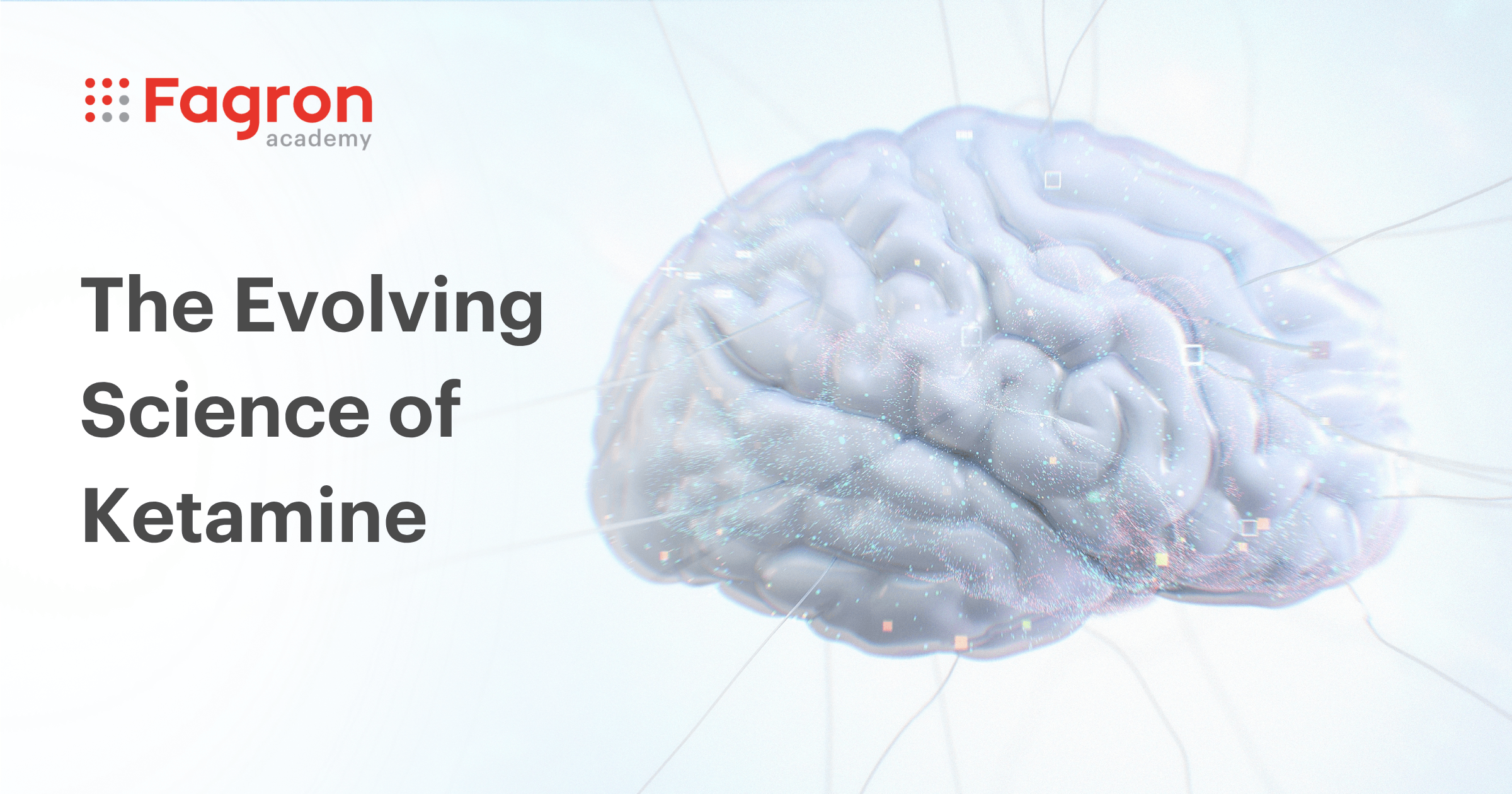
While Ketamine has been around since the 1950’s, new therapeutics applications continue to bloom before our eyes1. Originally applied as an anesthetic in veterinary patients, its use quickly expanded to use in human anesthesia and in the past 80 years has been investigated to treat chronic pain, seizures, headaches, alcohol, and substance abuse2. More recently, it is being studied to treat depression3, help with neuroprotection,4 and even promote synaptic elasticity5.
Chronic Pain Management
Although ketamine acts on multiple aspects of pain expression, Hocking and Cousins noted that research of ketamine as an agent for chronic pain management has lagged6, 8,. In turn, this may be due to the lack of robust results in chronic pain management, with the authors concluding that ketamine might be a reasonable “third-line” option when first - and second-line options have failed. In another meta-analysis, ketamine across multiple chronic pain syndromes in refractory patients provided short term benefits, with the authors noting bias in most of the studies they evaluated7. Blonk et al arrived at a similar conclusion with oral ketamine for pain management describing it has had a lack of evidence and a poor safety profile, recommending its oral use be limited to an add-on agent in refractory complex chronic pain patients8.
Refractory Epilepsy and Status Epilepticus
In addition to its use in chronic pain management, ketamine has additionally been evaluated for use in refractory epilepsy. Based on the fact that ketamine can be used in anesthetic doses for status epilepticus (SE), Borsato et al. performed a National Library of Medicine (NLM) database search for the use of low dose ketamine for refractory epilepticus, but found none9. Consequently, the authors reported the successful use of initially intravenous (IV) ketamine and later conversion to oral ketamine in patients with refractory seizures. The authors noted that IV ketamine at doses of 0.25-0.5 mg/kg/hr was more prone to cause drug-related side effects, whereas the use of oral ketamine in doses ranging from 500mg to 2000mg, divided into 2 to 4 doses per day, could likely present a better tolerated option, especially in combination with individualization based on Cytochrome P450 profiles. Alkhachroum et al. further demonstrated in 68 super-refractory SE (SRSE) patients between 2009 and 2018 that ketamine decreased seizure burden by at least 50% within 24 hours in 55 patients, then complete cessation in 43 patients. Later, Jacobwitz et al. in a single-center retrospective study, found that IV ketamine in doses ranging from 1 to 7mg/kg/day was effective in neonatal and pediatric patients with few adverse events10,11. Of interest, it was also noted that ketamine was more effective when initiated first rather than being added after the therapeutic failure of midazolam.
Applications in Migraine Therapy
Because of its effect on NMDA receptors and its use in acute and chronic pain, ketamine is a natural therapeutic consideration for migraines. Indeed, a few studies have looked at mostly intravenous administration but also intranasal administration of ketamine for various types of migraines12-16. In a double-blind, randomized parallel trial, 18 patients were prescribed 25mg of intranasal ketamine whereas 30 patients were administered 2mg of midazolam for migraine with prolonged aura. Ketamine statistically decreased severity of the migraines, but not the duration of the aura12. Seventy-seven patients in a retrospective review received intravenous ketamine after unsuccessful inpatient and outpatient aggressive treatment of chronic migraines. Of these patients, 71.4% demonstrated an acute response but no long-term benefit from the ketamine intervention13. Yet another retrospective review of 6 patients showed that all 6 patients reported a decrease of >6 points, on a scale of 0-10, after receiving IV ketamine, in doses ranging from 0.12 to 0.42mg/kg/h for outpatient refractory migraines14. With that said, a double-blind, placebo-controlled study of 34 patients (=17 ketamine, =17 placebo), demonstrated that the administration of IV ketamine at a dose of 0.2mg/kg did not show any improvement in migraines and more side effects than placebo16.
Substance Abuse Disorder and Mechanism of Action
Because of its application to pain management, it is likely not surprising that ketamine has been associated with abuse. However, what is surprising is that, ironically, it has also been studied for its use in substance abuse disorder (SUD) (i.e. alcohol, heroin, and cocaine) by reducing cravings. While the mechanism of action for this application is not well elucidated, it appears to be related to ketamine affecting neuroplasticity via NMDA receptor antagonism. This in turn increases AMPA receptor insertion, thereby reversing decreased glutamatergic transmission associated with addiction and depression7. Anecdotal evidence since the 1990s in the U.S. has demonstrated promising evidence of its application, mostly intramuscularly, for this use while previous, poorly structured studies in the USSR, and later the U.S. showed robust results for ketamine in SUD18-22. More recent studies have fortified these arguments with more robust results. One study indicated that 3 doses of intravenous ketamine (n=8) (dose of 0.41mg/kg to 0.71mg/hg) within 48 hours reduced the amount and frequency of cocaine use within 4 weeks of the study compared to baseline. Another study compared a single dose of ketamine (=0.71mg/kg/dose) to midazolam (=0.025mg/kg/dose), with ketamine showing a 67% reduction in cocaine use compared to midazolam23,24.
Treatment-Resistant Depression and Neuroplasticity
While these many applications are fantastic, even more exciting are some of the newer applications of ketamine, which include depression, neuroprotection, and synaptic plasticity. Indeed, the isomer of ketamine, (S)-ketamine, also known as esketamine, is commercially available as a nasal spray indicated for treatment resistant depression. The first placebo-controlled, double-blind trial published study looking at the use of ketamine for depression dates to 2000 and the team of Berman et al25. They demonstrated in 7 patients that a single dose of ketamine (=0.5mg/kg) vs placebo provided significant improvement within 72 hours of infusion for treatment resistant depression (TRD). This publication was significant because it opened the doors to the role of NMDA and glutamate in the pathophysiology of depression. Since that time, many other published studies, as well as the work done to justify the approval of esketamine, have further demonstrated the value both of intravenous and nasal ketamine for rapidly mitigating TRD and providing an effect that can last over 7 days after administration27-31.
References :
- https://www.sciencedirect.com/science/article/pii/S0006322324015919
- Afridi SK, Giffin NJ, Kaube H, Goadsby PJ. A randomized controlled trial of intranasal ketamine in migraine with prolonged aura. Neurology. 2013;80(7):642-647.
- Pomeroy JL, Marmura MJ, Nahas SJ, et al. Ketamine infusions for treatment refractory headache. Headache.2017;57(2):276-282
- Lauritsen C, Mazuera S, Lipton RB, Ashina S. Intravenous ketamine for subacute treatment of refractory chronicmigraine: a case series. J Headache Pain. 2016;17(1):106.
- Nicolodi M, Sicuteri F. Exploration of NMDA receptors in migraine: therapeutic and theoretic implications. Int J Clin Pharmacol Res. 1995;15(5-6):181-189.
- Etchison AR, Bos L, Ray M, et al. Low-dose ketamine does not improve migraine in the emergency department: a randomized placebo-controlled trial. West J Emerg Med. 2018;19(6):952-960
- Kolp E, Friedman HL, Young MS, Krupitsky E. Ketamine enhanced psychotherapy: preliminary clinical observations on its effectiveness in treating alcoholism. Humanist Psychol. 2006;34(4):399 422.
- Krupitsky EM. Ketamine psychedelic therapy (KPT) of alcoholism and neurosis. Multidiscip Assoc Psychedel Stud Newsl. 1992;3:24 28
- Grabski M, McAndrew A, Lawn W, et al. Adjunctive ketamine with relapse prevention-based psychological therapy in the treatment of alcohol use disorder. Am J Psychiatry. 2022;179(2):152 162
- Krupitsky E, Burakov A, Romanova T, Dunaevsky I, Strassman R, Grinenko A. Ketamine psychotherapy for heroin addiction: immediate effects and two-year follow-up. J Subst Abuse Treat. 2002;23(4):273 283
- Krupitsky EM, Burakov AM, Dunaevsky IV, Romanova TN, Slavina TY, Grinenko AY. Single versus repeated sessions of ketamine-assisted psychotherapy for people with heroin dependence. J Psychoact Drugs. 2007;39(1):13 19.
- Dakwar E, Levin F, Foltin RW, Nunes EV, Hart CL. The effects of subanesthetic ketamine infusions on motivation to quit and cue-induced craving in cocaine-dependent research volunteers. Biol Psychiatry. 2014;76(1):40 46.
- Dakwar E, Hart CL, Levin FR, Nunes EV, Foltin RW. Cocaine self-administration disrupted by the N-methyl-D-aspartate receptor antagonist ketamine: a randomized, crossover trial. Mol Psychiatry. 2017;22(1):76 81
- Berman RM, Cappiello A, Anand A, Oren DA, Heninger GR, Charney DS, Krystal JH. Antidepressant effects of ketamine in depressed patients. Biological Psychiatry. 2000;(47)4:351-354.
- Vande Voort JL, Morgan RJ, Kung S, Rasmussen KG, Rico J, Palmer BA, Schak KM, Tye SJ, Ritter MJ, Frye MA, Bobo WV. Contuation phase intravenous ketamine in adults with treatment resistant depression. J Affective Disorders. 2016;(206):300-304
- Zarate CA Jr., Singh JB, Carlson PJ et al.. A randomized trial of an N-methyl-D-aspartate antagonist in treatment-resistant major depression. Arch. Gen. Psychiatry 2006. 63:856–64
- Yavi M, Lee H, Henter ID et al. Ketamine treatment for depression: a review. Discov. Mental Health 2022.2:9
- Phillips JL, Norris S, Talbot J et al. Single, repeated, and maintenance ketamine infusions for treatment-resistant depression: a randomized controlled trial. Am. J. Psychiatry 2019. 176:401–9
- aan het Rot M, Collins KA, Murrough JW et al. Safety and efficacy of repeated-dose intravenous ketamine for treatment-resistant depression. Biol. Psychiatry 2010. 67:139–45
- Murrough JW, Perez AM, Pillemer S et al. Rapid and longer-term antidepressant effects of repeated ketamine infusions in treatment-resistant major depression. Biol. Psychiatry 2013. 74:250–56
